Explore Oregon Wines: Wineries | Varietals | AVAs | Cellar 503 Selections
Woe So Good
October 2025
A spooky month for a "Wednesday" theme....we chose to focus on the grape worlds most terrifying grape, Pinot Nero
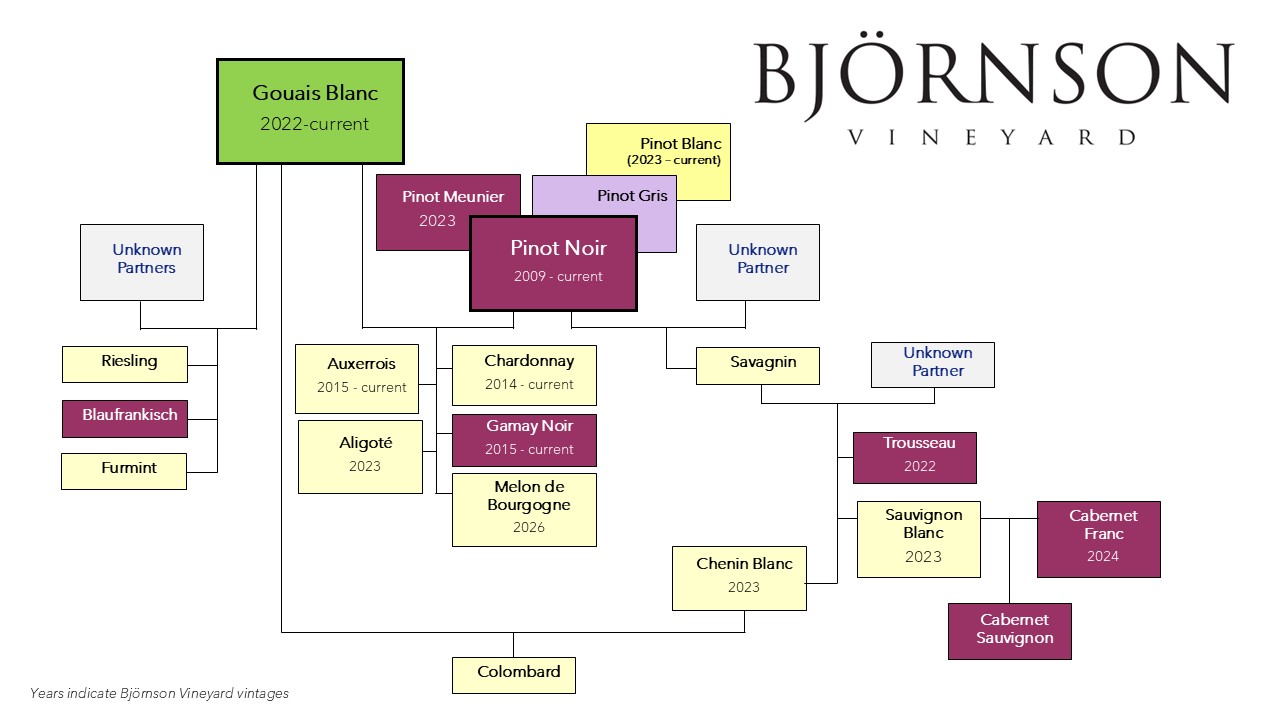
...or Pinot Noir as you might know it. Part of a powerful family and related to many of the worlds most known grape varieties, she is prolific and has family where it counts. To follow the frightening family tree, check out this great infographic from our friends at Björnson Vineyard.
Misunderstood as being light and bright, she is scary to grow. Pinot Noir is a difficult variety to cultivate and transform into wine. The grape's tendency to produce tightly packed clusters makes it susceptible to many viticultural hazards involving rot that require diligent canopy management.
The waif has thin skins and low levels of phenolic compounds that lend Pinot Noirs to producing mostly lightly colored, medium-bodied and low-tannin wines that can often go through phases of uneven and unpredictable aging. As old as time itself, Pinot noir is almost certainly a very ancient variety that may be only one or two generations removed from wild Vitis sylvestris vines.
A shape shifter, when young, wines made from Pinot Noir tend to have red fruit aromas of cherries, raspberries, and strawberries. As the wine ages, Pinot Noir has the potential to develop more vegetal and "barnyard" aromas that can contribute to the complexity of the wine.
A monster mother to three children that are all mutations of herself and an "unknown dark partner". The general DNA profiles of both Pinot Gris and Blanc are identical to Pinot Noir; and other Pinots, Pinot Mour, and Pinot Teinturier are also genetically similarly close. Almost any given Pinot (of whatever berry color) can occur as a complete mutation or as a chimera of almost any other Pinot.
Mind. Blown.
Be careful out there boyz and ghouls, and may woe season be spooky...